DT600
DT600 CNC drilling and tapping machine
- 700 × 420 mm Table size
- 600/400/350 mm X/Y/Z travel
- 20,000 rpm Max spindle speed
Maimach offers 24 CNC machining centers in four families: vertical (VMC series), horizontal (HMC series), gantry-type (GMC series) and drilling and tapping centers (DT series). Each machine page lists table size, axis travel, spindle data and load capacity so you can compare models, and you can request a quote for any of them.
CNC machining centers (24) Collaborative robots (10) Conventional lathes (6) Drilling machines (5) Grinding machines (2) Hydraulic presses (2) Milling machines (17) Other machine tools (1) Sawing machines (2)
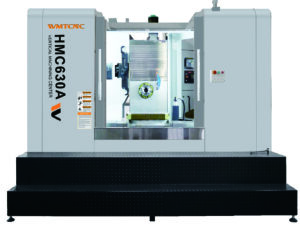
A machining center combines milling, drilling and tapping in one automated machine. The right model depends on the parts you make, not on the biggest numbers in a catalogue. Work through the points below before you request a quote.
Vertical machining centers (VMC) suit most general job-shop work, plates and single-side parts, and are the easiest to set up and load. Horizontal machining centers (HMC) machine several sides in one setup and clear chips well, which pays off in repeat batches. Gantry machines carry the workpiece on a fixed table and move the bridge, which is the usual choice for very large or heavy parts such as plates, frames and moulds.
Compare the X, Y and Z travels with your largest part including clamping. Leave room for the tool and for the fixture, not only for the workpiece. The table size and the maximum table load must cover the part and the fixture together.
BT40 spindles are the common choice for light and medium cutting at higher speed. BT50 spindles are stiffer and carry more torque, which suits heavy roughing in steel and cast iron. Check the spindle speed range, the power and the torque at the speeds you will really cut at, not only the peak figures.
Choose a controller your operators already know or can learn quickly, and check that programming support and service are available in your region. Ask for the stated positioning accuracy and repeatability, and how they are measured.
Check the tool magazine capacity and tool change time for the number of tools in your typical job. If you plan pallet changers, probing or a robot for loading, confirm the machine can be prepared for them.
Large machines need a suitable floor, lifting access and power supply. Plan transport, positioning, levelling and commissioning before the machine arrives.
Take your largest workpiece including the fixture and add room for tool access. The X, Y and Z travels, the table size and the table load must all cover it. If most parts are much smaller than the largest one, a smaller machine is usually cheaper to run.
A vertical machine is the flexible choice for mixed work and is simpler to load. A horizontal machine is worth considering for repeat batches that need several sides machined in one setup and good chip evacuation.
Both are tool holder tapers. BT40 is lighter and suits higher spindle speeds. BT50 is larger and stiffer and suits heavy cutting with high torque at lower speeds.
In a gantry machine the workpiece stays on a fixed table while the bridge moves. This allows very large and heavy parts and a large working area on a floor-mounted machine.
The price depends on size, spindle, controller, options and delivery. We do not publish list prices for every model; request a quote with your part size and requirements and we will reply with an offer.
Yes. Tell us what you manufacture, the material, the largest part size and weight and your production volume, and we will suggest suitable models.
request Not sure which machine suits you? Find the right machine